
• ¿Quieres apoyar a nuestro foro haciendo una donación?, entra aquí.

Expicaciones Cientificas acerca del universo que estan pa fumarse algo....

Brucewine

Hagen
Registrado
2014/04/05
Mensajes
59.573
Sexo
Macho
Antimateria es materia viajando al pasado

El concepto de antimateria no es algo muy simple de asimilar: se establece como lo opuesto a la materia capaz de aniquilarse mutuamente cuando entra en contacto con ella, en una reacción explosiva dantesca. Para nada es algo ajeno a los humanos. De hecho, ya hemos sido capaces de detectar antimateria, e incluso logramos aislarla en aceleradores de partículas durante periodos de 15 minutos.

energ%C3%ADa-oscura.jpg


La aplicación más interesante de la antimateria es su capacidad para aniquilar la materia y liberar 90 cuatrillones de veces más energía. Este factor tan espectacular puede ser posible pues dicha aniquilación involucra un juego de viaje en el tiempo. Por ejemplo, la “interpretación Feynman-Stueckelberg” sugiere que la antimateria es materia que va hacia atrás en el tiempo. Entonces, cuando alcanza a la materia normal que va hacia el frente en el tiempo, no son solo dos “objetos” que colisionan, sino un impacto frontal en la cuarta dimensión.

Esta no es más que una de muchas teorías, pero lo increíble es que resulta efectiva en las ecuaciones. La antimateria invierte todos los tipos de cantidades importantes pero, en lugar de generar un nuevo tipo de materia, se obtiene el mismo efecto que multiplicando el tiempo por -1.


La existencia oscilante

Si arrojas una roca en un lago, irremediablemente el agua oscilará. De la misma forma, si chocan dos agujeros negros a la mitad de la velocidad de la luz, la existencia oscilará. Colisionan de forma tan feroz que el espacio a su alrededor oscila de forma detectable. No es algo particularmente sorprendente, sobre todo si tomamos en cuenta que 60 octillones de toneladas de singularidades están chocando. Einstein supuso estas “ondas gravitacionales” hace más de un siglo.

ondas-gravitacionales-en-el-universo.jpg


Una colisión de espacio-tiempo tan poderosa capaz de oscilar la realidad pareciera una invención del cine. Pero los científicos ya detectaron el fenómeno.

El 14 de septiembre de 2015, dos singularidades colisionaron, perturbando el tejido de la realidad. El equivalente a tres masas solares enteras fue convertido en energía de ondas gravitacionales, un proceso tan poderoso que pudimos sentir sus efectos a más de mil millones de años luz de distancia. Cada célula de tu cuerpo fue gentilmente sacudida por un par de agujeros negros colisionando a la distancia. La detección de esto se hizo en el Laser Interferometer Gravitational-wave Observatory (LIGO).

El LIGO está formado por dos grandes complejos ubicados en lados opuestos de los Estados Unidos, de forma que pueden usar ese trozo de continente como un atraso de 10 milésimas de segundo. En cada complejo, un conjunto de láseres aislados son monitoreados constantemente. Tienen una precisión tan exacta, que la más mínima variación en la lectura indica que el universo cambió.

La detección de ondas gravitacionales es tan impresionante que solo la teoría de la idea llevó a Russell Alan Hulse y Joseph Hooton Taylor a ganar el Premio Nobel de física en el año de 1993.


El espacio-tiempo líquido

La relatividad general es la teoría que se ocupa de explicar cómo funcionan los objetos masivos en el Universo. Por otro lado, la mecánica cuántica se ocupa de esos “pequeños detalles”. ¿Pero, en qué punto convergen? Es algo complicado. Hasta ahora, los intentos de crear una gran Teoría Unificada no han hecho más que venir a derribar todo aquello que creíamos conocer sobre el espacio y el tiempo.

espacio-universo-liquido.jpg


Hay dos teorías sorprendentemente eficaces para explicar el Universo, pero son polos opuestos. Esa búsqueda por hacer coincidir la relatividad general con la mecánica cuántica (o encontrar algo más para sustituir ambas) es mucho más difícil que entrar en su corazón

Se han sugerido multitud de teorías físicas para resolver el problema, con nombres tan extravagantes como geometrodinámica, gravedad cuántica de bucles, etc. Uno de estos intentos es la teoría del vacío superfluido. Según esta idea, el espacio se asemeja a un fluido sin fricción. En este modelo, toda la realidad que percibimos no sería más que las olas de un océano aparentemente con mucha acción sucediendo sobre una superficie lisa, pero esa superficie en realidad sería el resultado de muchas más partículas actuando de una forma singular.

Es una teoría confusa y osada, por lo que ya hay gente intentando comprobarla. Estudios con rayos-X de alta energía y rayos gama de la Nebulosa del Cangrejo han refinado la hipótesis, confirmando que si el espacio fuera un fluido, estaría totalmente libre de fricción.


El Universo de un único electrón

¿Alguna vez te has preguntado cosas como: y si todos los seres humanos fuéramos un mismo ser? Los físicos ya lo hicieron, pero no creas que usaron sustancias alucinógenas, ellos prefieren algo más complicado como la mecánica cuántica.

el-universo-unico-electron.jpg


John Wheeler fue responsable de ideas tan descabelladas como los reactores neutrónicos, moderadores de neutrones, la expresión “agujeros de gusano espaciales” y por darse cuenta que los agujeros negros quizá tenían algo que ver con la gravedad. Ese hombre también fue responsable por la “Hipótesis de un único electrón”, donde cada electrón existente – en tu cerebro, en el cerebro de tu vecino, en el cerebro de Justin Bieber – son todos “el mismo electrón”, que viaja adelante y atrás en el tiempo para ser todo electrón individual.

En otras palabras, las mismas cargas negativas que llevan químicamente estas palabras hasta tu nervio óptico son las mismas que podemos encontrar en Alfa Centauri, en la cola de un camello en el medio del desierto o en el Oscar que ganó DiCaprio.

Wheeler debatió esta idea con Richard Feynman, uno de los físicos más condecorados del mundo, y a Feynman no le pareció ninguna estupidez. Tanto así que habló de la teoría en su discurso de aceptación del Premio Nobel, dándole el crédito por inspirar a la hipótesis de la antimateria que viaja en el tiempo, que tocamos en el primer punto de la lista.

El “Universo de un único electrón” funciona pues los electrones son totalmente indistinguibles. Cada electrón es exactamente el mismo. No se construyen – son joyas minúsculas de la física saltando dentro y fuera de las constantes fundamentales de la realidad. Y no es una idea absurda sin un parámetro práctico. Muchas tecnologías que involucran a la mecánica cuántica están basadas en esa imposibilidad de distinguirlos.

La única razón por la que esta no es una teoría científica se debe a que, de hecho, no puede refutarse. Solo puedes aceptarla o ignorarla. Y eso que la ciencia es capaz de dar el más severo ultimátum del mundo.


La realidad puede romperse sin previo aviso

En el budismo se cree que las cosas sin naturaleza inherente representan al vacío. Para la física, el vacío podría ser una bomba de tiempo capaz de aniquilar el Universo. La idea incluso abarca la posibilidad de que el vacío pueda romperse. Los investigadores creen que el vacío es el estado de existencia con más baja energía. Pero, si existiera un estado de menor energía debajo de este, entonces toda nuestra realidad sería como una delgada capa de hielo sobre un lago congelado. Un pequeño agujero haría que todo se hundiera. Un universo enteramente nuevo irradiaría a partir del punto de fractura de la realidad, algo que llaman “evento de metaestabilidad del vacío”.

realidad-rompiendose.jpg


Toda vez que los cambios en las leyes físicas tienen que viajar a la velocidad de la luz, obedeciendo las leyes antes de sustituirlas, ni siquiera nos daríamos cuenta cuando el fin llegara. Simplemente dejaríamos de existir.

Una versión de los multiversos ofrece una idea un poco más divertida: menciona que la realidad sería como burbujas de universos estallando constantemente dentro y fuera de la existencia en cualquier instante, entonces nuestro universo es solo uno que aún no se ha destruido caóticamente a sí mismo.

Esta idea parece salida de una borrachera en un bar en lugar de una teoría desarrollada en un laboratorio, pero la verdad es que ya ha sido puesta a prueba por las máquinas más avanzadas que creamos hasta la fecha. Cuando el Gran Colisionador de Hadrones descubrió la masa del bosón de Higgs, fuimos capaces de determinar si nuestro universo era estable. La respuesta fue… más o menos.

El mínimo de masa que el bosón debía tener para que el universo fuera mejor que un globo viejo era de 129.8 GeV. La medición de la masa resultó en 125 GeV. El margen de error de esa masa mínima es de más o menos 5.6 GeV, de forma que el valor se ubica en un punto entre 124.2 y 135.4 GeV. Nosotros medimos 125.1, más o menos 0.2 GeV.


Vil y sucio Pico Paste,.... pero esta bueno .... no dejo el pollito por que ya sabemos de donde viene :hands:
 
Antimateria es materia viajando al pasado

El concepto de antimateria no es algo muy simple de asimilar: se establece como lo opuesto a la materia capaz de aniquilarse mutuamente cuando entra en contacto con ella, en una reacción explosiva dantesca. Para nada es algo ajeno a los humanos. De hecho, ya hemos sido capaces de detectar antimateria, e incluso logramos aislarla en aceleradores de partículas durante periodos de 15 minutos.

energ%C3%ADa-oscura.jpg


La aplicación más interesante de la antimateria es su capacidad para aniquilar la materia y liberar 90 cuatrillones de veces más energía. Este factor tan espectacular puede ser posible pues dicha aniquilación involucra un juego de viaje en el tiempo. Por ejemplo, la “interpretación Feynman-Stueckelberg” sugiere que la antimateria es materia que va hacia atrás en el tiempo. Entonces, cuando alcanza a la materia normal que va hacia el frente en el tiempo, no son solo dos “objetos” que colisionan, sino un impacto frontal en la cuarta dimensión.

Esta no es más que una de muchas teorías, pero lo increíble es que resulta efectiva en las ecuaciones. La antimateria invierte todos los tipos de cantidades importantes pero, en lugar de generar un nuevo tipo de materia, se obtiene el mismo efecto que multiplicando el tiempo por -1.


La existencia oscilante

Si arrojas una roca en un lago, irremediablemente el agua oscilará. De la misma forma, si chocan dos agujeros negros a la mitad de la velocidad de la luz, la existencia oscilará. Colisionan de forma tan feroz que el espacio a su alrededor oscila de forma detectable. No es algo particularmente sorprendente, sobre todo si tomamos en cuenta que 60 octillones de toneladas de singularidades están chocando. Einstein supuso estas “ondas gravitacionales” hace más de un siglo.

ondas-gravitacionales-en-el-universo.jpg


Una colisión de espacio-tiempo tan poderosa capaz de oscilar la realidad pareciera una invención del cine. Pero los científicos ya detectaron el fenómeno.

El 14 de septiembre de 2015, dos singularidades colisionaron, perturbando el tejido de la realidad. El equivalente a tres masas solares enteras fue convertido en energía de ondas gravitacionales, un proceso tan poderoso que pudimos sentir sus efectos a más de mil millones de años luz de distancia. Cada célula de tu cuerpo fue gentilmente sacudida por un par de agujeros negros colisionando a la distancia. La detección de esto se hizo en el Laser Interferometer Gravitational-wave Observatory (LIGO).

El LIGO está formado por dos grandes complejos ubicados en lados opuestos de los Estados Unidos, de forma que pueden usar ese trozo de continente como un atraso de 10 milésimas de segundo. En cada complejo, un conjunto de láseres aislados son monitoreados constantemente. Tienen una precisión tan exacta, que la más mínima variación en la lectura indica que el universo cambió.

La detección de ondas gravitacionales es tan impresionante que solo la teoría de la idea llevó a Russell Alan Hulse y Joseph Hooton Taylor a ganar el Premio Nobel de física en el año de 1993.


El espacio-tiempo líquido

La relatividad general es la teoría que se ocupa de explicar cómo funcionan los objetos masivos en el Universo. Por otro lado, la mecánica cuántica se ocupa de esos “pequeños detalles”. ¿Pero, en qué punto convergen? Es algo complicado. Hasta ahora, los intentos de crear una gran Teoría Unificada no han hecho más que venir a derribar todo aquello que creíamos conocer sobre el espacio y el tiempo.

espacio-universo-liquido.jpg


Hay dos teorías sorprendentemente eficaces para explicar el Universo, pero son polos opuestos. Esa búsqueda por hacer coincidir la relatividad general con la mecánica cuántica (o encontrar algo más para sustituir ambas) es mucho más difícil que entrar en su corazón

Se han sugerido multitud de teorías físicas para resolver el problema, con nombres tan extravagantes como geometrodinámica, gravedad cuántica de bucles, etc. Uno de estos intentos es la teoría del vacío superfluido. Según esta idea, el espacio se asemeja a un fluido sin fricción. En este modelo, toda la realidad que percibimos no sería más que las olas de un océano aparentemente con mucha acción sucediendo sobre una superficie lisa, pero esa superficie en realidad sería el resultado de muchas más partículas actuando de una forma singular.

Es una teoría confusa y osada, por lo que ya hay gente intentando comprobarla. Estudios con rayos-X de alta energía y rayos gama de la Nebulosa del Cangrejo han refinado la hipótesis, confirmando que si el espacio fuera un fluido, estaría totalmente libre de fricción.


El Universo de un único electrón

¿Alguna vez te has preguntado cosas como: y si todos los seres humanos fuéramos un mismo ser? Los físicos ya lo hicieron, pero no creas que usaron sustancias alucinógenas, ellos prefieren algo más complicado como la mecánica cuántica.

el-universo-unico-electron.jpg


John Wheeler fue responsable de ideas tan descabelladas como los reactores neutrónicos, moderadores de neutrones, la expresión “agujeros de gusano espaciales” y por darse cuenta que los agujeros negros quizá tenían algo que ver con la gravedad. Ese hombre también fue responsable por la “Hipótesis de un único electrón”, donde cada electrón existente – en tu cerebro, en el cerebro de tu vecino, en el cerebro de Justin Bieber – son todos “el mismo electrón”, que viaja adelante y atrás en el tiempo para ser todo electrón individual.

En otras palabras, las mismas cargas negativas que llevan químicamente estas palabras hasta tu nervio óptico son las mismas que podemos encontrar en Alfa Centauri, en la cola de un camello en el medio del desierto o en el Oscar que ganó DiCaprio.

Wheeler debatió esta idea con Richard Feynman, uno de los físicos más condecorados del mundo, y a Feynman no le pareció ninguna estupidez. Tanto así que habló de la teoría en su discurso de aceptación del Premio Nobel, dándole el crédito por inspirar a la hipótesis de la antimateria que viaja en el tiempo, que tocamos en el primer punto de la lista.

El “Universo de un único electrón” funciona pues los electrones son totalmente indistinguibles. Cada electrón es exactamente el mismo. No se construyen – son joyas minúsculas de la física saltando dentro y fuera de las constantes fundamentales de la realidad. Y no es una idea absurda sin un parámetro práctico. Muchas tecnologías que involucran a la mecánica cuántica están basadas en esa imposibilidad de distinguirlos.

La única razón por la que esta no es una teoría científica se debe a que, de hecho, no puede refutarse. Solo puedes aceptarla o ignorarla. Y eso que la ciencia es capaz de dar el más severo ultimátum del mundo.


La realidad puede romperse sin previo aviso

En el budismo se cree que las cosas sin naturaleza inherente representan al vacío. Para la física, el vacío podría ser una bomba de tiempo capaz de aniquilar el Universo. La idea incluso abarca la posibilidad de que el vacío pueda romperse. Los investigadores creen que el vacío es el estado de existencia con más baja energía. Pero, si existiera un estado de menor energía debajo de este, entonces toda nuestra realidad sería como una delgada capa de hielo sobre un lago congelado. Un pequeño agujero haría que todo se hundiera. Un universo enteramente nuevo irradiaría a partir del punto de fractura de la realidad, algo que llaman “evento de metaestabilidad del vacío”.

realidad-rompiendose.jpg


Toda vez que los cambios en las leyes físicas tienen que viajar a la velocidad de la luz, obedeciendo las leyes antes de sustituirlas, ni siquiera nos daríamos cuenta cuando el fin llegara. Simplemente dejaríamos de existir.

Una versión de los multiversos ofrece una idea un poco más divertida: menciona que la realidad sería como burbujas de universos estallando constantemente dentro y fuera de la existencia en cualquier instante, entonces nuestro universo es solo uno que aún no se ha destruido caóticamente a sí mismo.

Esta idea parece salida de una borrachera en un bar en lugar de una teoría desarrollada en un laboratorio, pero la verdad es que ya ha sido puesta a prueba por las máquinas más avanzadas que creamos hasta la fecha. Cuando el Gran Colisionador de Hadrones descubrió la masa del bosón de Higgs, fuimos capaces de determinar si nuestro universo era estable. La respuesta fue… más o menos.

El mínimo de masa que el bosón debía tener para que el universo fuera mejor que un globo viejo era de 129.8 GeV. La medición de la masa resultó en 125 GeV. El margen de error de esa masa mínima es de más o menos 5.6 GeV, de forma que el valor se ubica en un punto entre 124.2 y 135.4 GeV. Nosotros medimos 125.1, más o menos 0.2 GeV.

Vil y sucio Pico Paste,.... pero esta bueno .... no dejo el pollito por que ya sabemos de donde viene :hands:

a modo general, esta interesante el artículo, no obstante es muy superficial y falto profundidad académica
por ejemplo, la antimatería ha sido estudiada hace variás décadas, ya que fueron propuestas en la ecuación de Paul Dirac ya en 1928.

Básicamente las antipartículas son un tipo de particula subatomica, que puede ser fermiónica o bariónica con carga inversa, cito ejemplo, al positron es la antiparticula del electron, tiene la misma masa pero a diferencia del electrón que tiene carga negativa, el positron tiene carga positiva, el antiproton, es una antipartícula de masa igual al proton, pero con carga positiva.

Evidentemente cuando colisionas, la reacción es extremadamente exotérmica, debido a la ruptura de una de las fuerzas fundamentas, la interacción nuclear fuerte y débil (recuerda que las fuerzas fundamentales del universo son el electromagnetismo, la gravedad, la interacción nuclear fuerte y débil).

En el Universo primigéneo se cree que la antimatería existio en iguales cantidades de la materia, destruyendose mutuamente por tiempos de planck, pero la materia se hizo más abundante que la mteria, no se sabe aún porque, pero se perdió la simetría. Ahora sabemos que el universo tiene solo un 4% de materia como la conocemos (materia bariónica), el resto es materia oscura y energía oscura.

Sobre la gran teoría de la unificación, sería bueno que precisaras un poco más de las teorias de campo unificado, ya que de los tiempos de Einstein se han realizados esfuerzos en esa dirección, como así teoría de los bucles de gravedad cuantica y tiempo.

Esta interesante, favor profundizar y citar la fuente
 
a modo general, esta interesante el artículo, no obstante es muy superficial y falto profundidad académica
por ejemplo, la antimatería ha sido estudiada hace variás décadas, ya que fueron propuestas en la ecuación de Paul Dirac ya en 1928.

Básicamente las antipartículas son un tipo de particula subatomica, que puede ser fermiónica o bariónica con carga inversa, cito ejemplo, al positron es la antiparticula del electron, tiene la misma masa pero a diferencia del electrón que tiene carga negativa, el positron tiene carga positiva, el antiproton, es una antipartícula de masa igual al proton, pero con carga positiva.

Evidentemente cuando colisionas, la reacción es extremadamente exotérmica, debido a la ruptura de una de las fuerzas fundamentas, la interacción nuclear fuerte y débil (recuerda que las fuerzas fundamentales del universo son el electromagnetismo, la gravedad, la interacción nuclear fuerte y débil).

En el Universo primigéneo se cree que la antimatería existio en iguales cantidades de la materia, destruyendose mutuamente por tiempos de planck, pero la materia se hizo más abundante que la mteria, no se sabe aún porque, pero se perdió la simetría. Ahora sabemos que el universo tiene solo un 4% de materia como la conocemos (materia bariónica), el resto es materia oscura y energía oscura.

Sobre la gran teoría de la unificación, sería bueno que precisaras un poco más de las teorias de campo unificado, ya que de los tiempos de Einstein se han realizados esfuerzos en esa dirección, como así teoría de los bucles de gravedad cuantica y tiempo.

Esta interesante, favor profundizar y citar la fuente
Profundidad académica?, ni que todos fuesemos doctores en física espacial. Es divulgación científica no más, la idea es que todos entiendan y se interesen.
Para los detalles de alto nivel están los papers y las conferencias.


Buen tema.
 
No creo que eso cuadre mucho con la física de partículas. Como podría invertirse la carga eléctrica con solo viajar hacia atrás ? . Que las pasa a las partículas neutras cuando viajan hacia atrás? .
Mas bien puede cuadrar con el empaquetamiento de las partículas.
 
me robaron la teoría de que todo es un solo punto. interactuando en infinitas dimensiones.

por ejemplo quiebras un espejo en millones de partes y las juntas
y aplicas un rayo laser veras el la luz del laser en miles de lados al mismo tiempo.

pues imagínate que todos esos vidrios son dimensiones conjugando la luz.
 
me robaron la teoría de que todo es un solo punto. interactuando en infinitas dimensiones.

por ejemplo quiebras un espejo en millones de partes y las juntas
y aplicas un rayo laser veras el la luz del laser en miles de lados al mismo tiempo.

pues imagínate que todos esos vidrios son dimensiones conjugando la luz.

No creo que sea como usted compañero lo compara.

cito el mismo ejemplo, un rayo laser, o sea luz monocro,atica coherente en que los fotones son isoenergéticos y oscilan en fase, tu los proyectas sobre fragmentos de cristal destruido, por óptica geométrica verías haces del laser proyectarse en varias direccioes, no obstante caya haz reflejado lo puedes obtener multiplicando un escalar de magnitud por los vectores generadores del espcio 3D, i,k y k

Dicho de otro modo, cualquier proyección dimensional en nuestro universo, lo puedes descomponer como una combinación lineal de tres vectores unitarios que determinan nuestro espacio a(1,0,0)+b(0,1,0)+c(0,0,1) con a,b,c en R

De hecho las últimas mediciones de anisotropias de radiación de fondo de microondas deducen que nuestro universo es plano, por lo tando la geometría euclidea es aplicable en todo el.

No hay evidencia de partículas que hayan podido viajar en el tiempo, la teoría general de la relatividda nos hace entender el universo como una grilla tetradimensional de tres dimensiones espaciales más una temporal que es desformada en presencia de campos gravitatorios, concluyendo que como magnitud física el tiempo no es absoluto sino relativo, podemos comprimirlo, estirarlo, pero no viajar a través de él, paradojas de causalidad y efecto.

El resto de las teorias son interesantes fumándose un cuete
 
No creo que sea como usted compañero lo compara.

cito el mismo ejemplo, un rayo laser, o sea luz monocro,atica coherente en que los fotones son isoenergéticos y oscilan en fase, tu los proyectas sobre fragmentos de cristal destruido, por óptica geométrica verías haces del laser proyectarse en varias direccioes, no obstante caya haz reflejado lo puedes obtener multiplicando un escalar de magnitud por los vectores generadores del espcio 3D, i,k y k

Dicho de otro modo, cualquier proyección dimensional en nuestro universo, lo puedes descomponer como una combinación lineal de tres vectores unitarios que determinan nuestro espacio a(1,0,0)+b(0,1,0)+c(0,0,1) con a,b,c en R

De hecho las últimas mediciones de anisotropias de radiación de fondo de microondas deducen que nuestro universo es plano, por lo tando la geometría euclidea es aplicable en todo el.

No hay evidencia de partículas que hayan podido viajar en el tiempo, la teoría general de la relatividda nos hace entender el universo como una grilla tetradimensional de tres dimensiones espaciales más una temporal que es desformada en presencia de campos gravitatorios, concluyendo que como magnitud física el tiempo no es absoluto sino relativo, podemos comprimirlo, estirarlo, pero no viajar a través de él, paradojas de causalidad y efecto.

El resto de las teorias son interesantes fumándose un cuete

Lo que tambien dice ahi contertulio ... en esa combinacion de vectores. a(1,0,0)+b(0,1,0)+c(0,0,1) con a,b,c en R, es que el espacio no se deforma.
 
de que es la imagen estimado
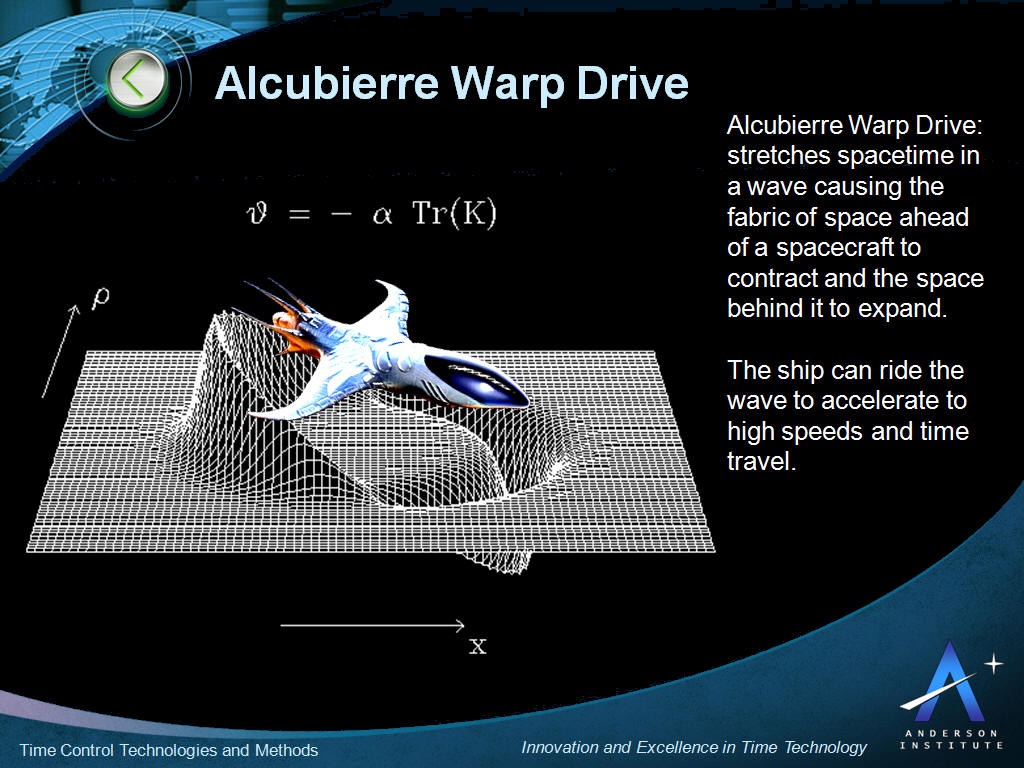
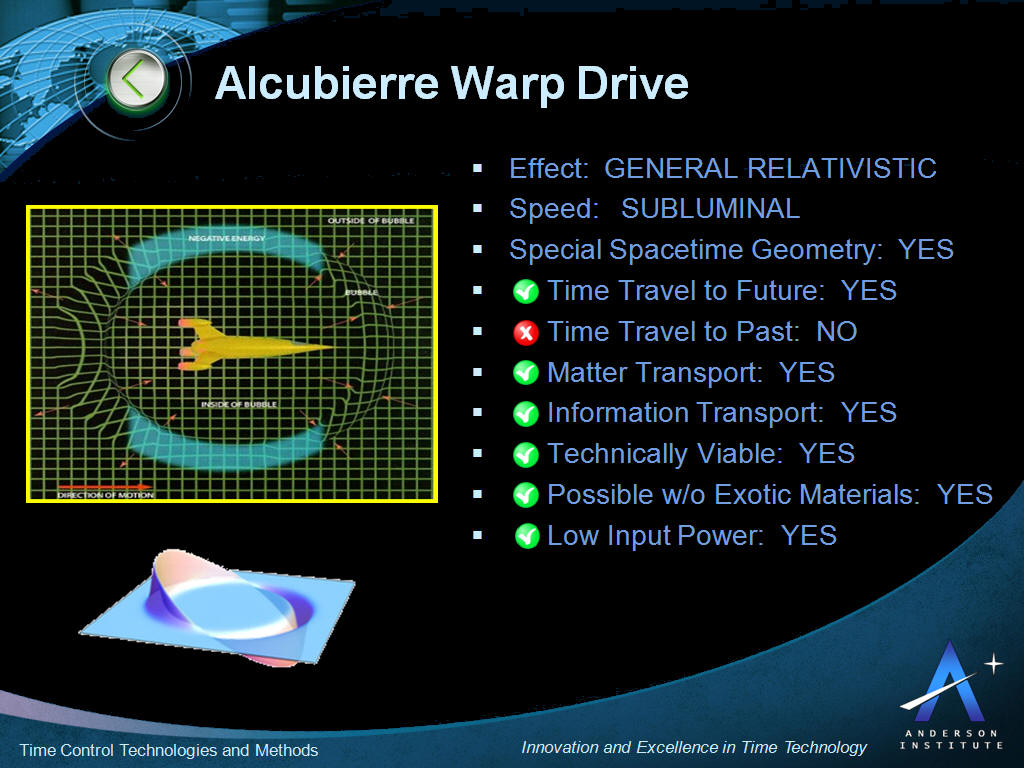
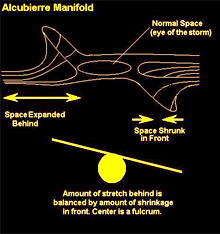
alcubierre-warp-drive-characteristics.jpg

alcubierre-warp-drive-overview.jpg


Alcubierre Warp Drive
An Overview and Comparison by Dr. David Lewis Anderson


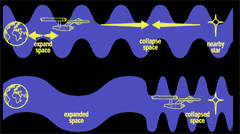
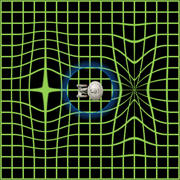
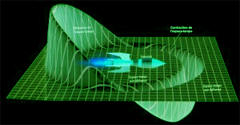
An Alcubierre Warp Drive stretches spacetime in a wave causing the fabric of space ahead of a spacecraft to contract and the space behind it to expand. The ship can ride the wave to accelerate to high speeds and time travel.


The Alcubierre drive, also known as the Alcubierre metric or Warp Drive, is a mathematical model of a spacetime exhibiting features reminiscent of the fictional "warp drive" from Star Trek, which can travel "faster than light" (although not in a local sense - see below).

The key characteristics of the application of Alcubierre warp drives for time control and time travel are presented in the picture below. This is followed by more detail describing the effect below.


Alcubierre Warp Drive Description
alcubierre-spacetime-warp-drive.jpg

In 1994, the Mexican physicist Miguel Alcubierre proposed a method of stretching space in a wave which would in theory cause the fabric of space ahead of a spacecraft to contract and the space behind it to expand. The ship would ride this wave inside a region known as a warp bubble of flat space. Since the ship is not moving within this bubble, but carried along as the region itself moves, conventional relativistic effects such as time dilation do not apply in the way they would in the case of a ship moving at high velocity through flat spacetime. Also, this method of travel does not actually involve moving faster than light in a local sense, since a light beam within the bubble would still always move faster than the ship; it is only "faster than light" in the sense that, thanks to the contraction of the space in front of it, the ship could reach its destination faster than a light beam restricted to travelling outside the warp bubble. Thus, the Alcubierre drive does not contradict the conventional claim that relativity forbids a slower-than-light object to accelerate to faster-than-light speeds.

Alcubierre Metric
The Alcubierre Metric defines the so-called warp drive spacetime. This is a Lorentzian manifold which, if interpreted in the context of general relativity, exhibits features reminiscent of the warp drive from Star Trek: a warp bubble appears in previously flat spacetime and moves off at effectively superluminal speed. Inhabitants of the bubble feel no inertial effects. The object(s) within the bubble are not moving (locally) faster than light, instead, the space around them shifts so that the object(s) arrives at its destination faster than light would in normal space.

Alcubierre chose a specific form for the function f, but other choices give a simpler spacetime exhibiting the desired "warp drive" effects more clearly and simply.

Mathematics of the Alcubierre drive
Using the 3+1 formalism of general relativity, the spacetime is described by a foliation of space-like hypersurfaces of constant coordinate time t. The general form of the Alcubierre metric is:

alcubierre-001.gif


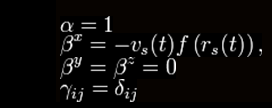
where α is the lapse function that gives the interval of proper time between nearby hypersurfaces, βI is the shift vector that relates the spatial coordinate systems on different hypersurfaces and γij is a positive definite metric on each of the hypersurfaces. The particular form that Alcubierre studied is defined by:

alcubierre-002.gif

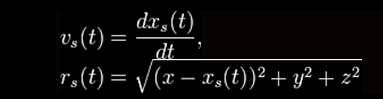
where
alcubierre-003.gif

and

alcubierre-004.jpg


with R > 0 and σ > 0 arbitrary parameters. Alcubierre's specific form of the metric can thus be written;
alcubierre-005.gif


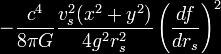
With this particular form of the metric, it can be shown that the energy density measured by observers whose 4-velocity is normal to the hypersurfaces is given by
alcubierre-006.gif


alcubierre-warp-drive-for-time-travel.jpg

where g is the determinant of the metric tensor. Thus, as the energy density is negative, one needs exotic matter to travel faster than the speed of light. The existence of exotic matter is not theoretically ruled out, the Casimir effect and the accelerating universe both lending support to the proposed existence of such matter. However, generating enough exotic matter and sustaining it to perform feats such as faster-than-light travel (and also to keep open the 'throat' of a wormhole) is thought to be impractical. Low has argued that within the context of general relativity, it is impossible to construct a warp drive in the absence of exotic matter. It is generally believed that a consistent theory of quantum gravity will resolve such issues once and for all.

Physics of the Alcubierre drive
alcubierre-warp-drive-manifold.jpg

For those familiar with the effects of special relativity, such as Lorentz contraction and time dilation, the Alcubierre metric has some apparently peculiar aspects. In particular, Alcubierre has shown that even when the ship is accelerating, it travels on a free-fall geodesic. In other words, a ship using the warp to accelerate and decelerate is always in free fall, and the crew would experience no accelerational g-forces. Enormous tidal forces would be present near the edges of the flat-space volume because of the large space curvature there, but by suitable specification of the metric, these would be made very small within the volume occupied by the ship.

The original warp drive metric, and simple variants of it, happen to have the ADM form which is often used in discussing the initial value formulation of general relativity. This may explain the widespread misconception that this spacetime is a solution of the field equation of general relativity. Metrics in ADM form are adapted to a certain family of inertial observers, but these observers are not really physically distinguished from other such families. Alcubierre interpreted his "warp bubble" in terms of a contraction of "space" ahead of the bubble and an expansion behind. But this interpretation might be misleading, since the contraction and expansion actually refers to the relative motion of nearby members of the family of ADM observers.

In general relativity, one often first specifies a plausible distribution of matter and energy, and then finds the geometry of the spacetime associated with it; but it is also possible to run the Einstein field equations in the other direction, first specifying a metric and then finding the energy-momentum tensor associated with it, and this is what Alcubierre did in building his metric. This practice means that the solution can violate various energy conditions and require exotic matter. The need for exotic matter leads to questions about whether it is actually possible to find a way to distribute the matter in an initial spacetime which lacks a "warp bubble" in such a way that the bubble will be created at a later time. Yet another problem is that, according to Serguei Krasnikov, it would be impossible to generate the bubble without being able to force the exotic matter to move at locally FTL speeds, which would require the existence of tachyons. Some methods have been suggested which would avoid the problem of tachyonic motion, but would probably generate a naked singularity at the front of the bubble.

Difficulties
alcubierre-warp-drive-top-view.jpg

Significant problems with the metric of this form stem from the fact that all known warp drive spacetimes violate various energy conditions. It is true that certain experimentally verified quantum phenomena, such as the Casimir effect, when described in the context of the quantum field theories, lead to stress-energy tensors which also violate the energy conditions and so one might hope that Alcubierre type warp drives could perhaps be physically realized by clever engineering taking advantage of such quantum effects. However, if certain quantum inequalities conjectured by Ford and Roman hold, then the energy requirements for some warp drives may be absurdly gigantic, e.g. the energy -1067gram equivalent might be required to transport a small spaceship across the Milky Way galaxy. This is orders of magnitude greater than the mass of the universe. Counterarguments to these apparent problems have been offered, but not everyone is convinced they can be overcome.

ship-in-alcubierre-warp-field.jpg

Chris Van Den Broeck, in 1999, has tried to address the potential issues. By contracting the 3+1 dimensional surface area of the 'bubble' being transported by the drive, while at the same time expanding the 3 dimensional volume contained inside, Van Den Broeck was able to reduce the total energy needed to transport small atoms to less than 3 solar masses. Later, by slightly modifying the Van Den Broeck metric, Krasnikov reduced the necessary total amount of negative energy to a few milligrams.

Krasnikov proposed that, if tachyonic matter could not be found or used, then a solution might be to arrange for masses along the path of the vessel to be set in motion in such a way that the required field was produced. But in this case the Alcubierre Drive vessel is not able to go dashing around the galaxy at will. It is only able to travel routes which, like a railroad, have first been equipped with the necessary infrastructure.

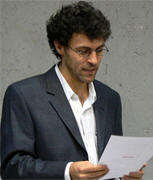
miguel-alcubierre.jpg

Miguel Alcubierre
The pilot inside the bubble is causally disconnected with its walls and cannot carry out any action outside the bubble. However, it is necessary to place devices along the route in advance, and since the pilot cannot do this while "in transit", the bubble cannot be used for the first trip to a distant star. In other words, to travel to Vega (which is 26 light-years from the Earth) one first has to arrange everything so that the bubble moving toward Vega with a superluminal velocity would appear and these arrangements will always take more than 26 years.

Coule has argued that schemes such as the one proposed by Alcubierre are not feasible because the matter to be placed on the road beforehand has to be placed at superluminal speed. Thus, according to Coule, an Alcubierre Drive is required in order to build an Alcubierre Drive. Since none have been proven to exist already then the drive is impossible to construct, even if the metric is physically meaningful. Coule argues that an analogous objection will apply to any proposed method of constructing an Alcubierre Drive.
 
Última edición:
alcubierre-warp-drive-characteristics.jpg

alcubierre-warp-drive-overview.jpg


Alcubierre Warp Drive
An Overview and Comparison by Dr. David Lewis Anderson


An Alcubierre Warp Drive stretches spacetime in a wave causing the fabric of space ahead of a spacecraft to contract and the space behind it to expand. The ship can ride the wave to accelerate to high speeds and time travel.


The Alcubierre drive, also known as the Alcubierre metric or Warp Drive, is a mathematical model of a spacetime exhibiting features reminiscent of the fictional "warp drive" from Star Trek, which can travel "faster than light" (although not in a local sense - see below).

The key characteristics of the application of Alcubierre warp drives for time control and time travel are presented in the picture below. This is followed by more detail describing the effect below.


Alcubierre Warp Drive Description
alcubierre-spacetime-warp-drive.jpg

In 1994, the Mexican physicist Miguel Alcubierre proposed a method of stretching space in a wave which would in theory cause the fabric of space ahead of a spacecraft to contract and the space behind it to expand. The ship would ride this wave inside a region known as a warp bubble of flat space. Since the ship is not moving within this bubble, but carried along as the region itself moves, conventional relativistic effects such as time dilation do not apply in the way they would in the case of a ship moving at high velocity through flat spacetime. Also, this method of travel does not actually involve moving faster than light in a local sense, since a light beam within the bubble would still always move faster than the ship; it is only "faster than light" in the sense that, thanks to the contraction of the space in front of it, the ship could reach its destination faster than a light beam restricted to travelling outside the warp bubble. Thus, the Alcubierre drive does not contradict the conventional claim that relativity forbids a slower-than-light object to accelerate to faster-than-light speeds.

Alcubierre Metric
The Alcubierre Metric defines the so-called warp drive spacetime. This is a Lorentzian manifold which, if interpreted in the context of general relativity, exhibits features reminiscent of the warp drive from Star Trek: a warp bubble appears in previously flat spacetime and moves off at effectively superluminal speed. Inhabitants of the bubble feel no inertial effects. The object(s) within the bubble are not moving (locally) faster than light, instead, the space around them shifts so that the object(s) arrives at its destination faster than light would in normal space.

Alcubierre chose a specific form for the function f, but other choices give a simpler spacetime exhibiting the desired "warp drive" effects more clearly and simply.

Mathematics of the Alcubierre drive
Using the 3+1 formalism of general relativity, the spacetime is described by a foliation of space-like hypersurfaces of constant coordinate time t. The general form of the Alcubierre metric is:

alcubierre-001.gif


where α is the lapse function that gives the interval of proper time between nearby hypersurfaces, βI is the shift vector that relates the spatial coordinate systems on different hypersurfaces and γij is a positive definite metric on each of the hypersurfaces. The particular form that Alcubierre studied is defined by:

alcubierre-002.gif

where
alcubierre-003.gif

and

alcubierre-004.jpg


with R > 0 and σ > 0 arbitrary parameters. Alcubierre's specific form of the metric can thus be written;
alcubierre-005.gif


With this particular form of the metric, it can be shown that the energy density measured by observers whose 4-velocity is normal to the hypersurfaces is given by
alcubierre-006.gif


alcubierre-warp-drive-for-time-travel.jpg

where g is the determinant of the metric tensor. Thus, as the energy density is negative, one needs exotic matter to travel faster than the speed of light. The existence of exotic matter is not theoretically ruled out, the Casimir effect and the accelerating universe both lending support to the proposed existence of such matter. However, generating enough exotic matter and sustaining it to perform feats such as faster-than-light travel (and also to keep open the 'throat' of a wormhole) is thought to be impractical. Low has argued that within the context of general relativity, it is impossible to construct a warp drive in the absence of exotic matter. It is generally believed that a consistent theory of quantum gravity will resolve such issues once and for all.

Physics of the Alcubierre drive
alcubierre-warp-drive-manifold.jpg

For those familiar with the effects of special relativity, such as Lorentz contraction and time dilation, the Alcubierre metric has some apparently peculiar aspects. In particular, Alcubierre has shown that even when the ship is accelerating, it travels on a free-fall geodesic. In other words, a ship using the warp to accelerate and decelerate is always in free fall, and the crew would experience no accelerational g-forces. Enormous tidal forces would be present near the edges of the flat-space volume because of the large space curvature there, but by suitable specification of the metric, these would be made very small within the volume occupied by the ship.

The original warp drive metric, and simple variants of it, happen to have the ADM form which is often used in discussing the initial value formulation of general relativity. This may explain the widespread misconception that this spacetime is a solution of the field equation of general relativity. Metrics in ADM form are adapted to a certain family of inertial observers, but these observers are not really physically distinguished from other such families. Alcubierre interpreted his "warp bubble" in terms of a contraction of "space" ahead of the bubble and an expansion behind. But this interpretation might be misleading, since the contraction and expansion actually refers to the relative motion of nearby members of the family of ADM observers.

In general relativity, one often first specifies a plausible distribution of matter and energy, and then finds the geometry of the spacetime associated with it; but it is also possible to run the Einstein field equations in the other direction, first specifying a metric and then finding the energy-momentum tensor associated with it, and this is what Alcubierre did in building his metric. This practice means that the solution can violate various energy conditions and require exotic matter. The need for exotic matter leads to questions about whether it is actually possible to find a way to distribute the matter in an initial spacetime which lacks a "warp bubble" in such a way that the bubble will be created at a later time. Yet another problem is that, according to Serguei Krasnikov, it would be impossible to generate the bubble without being able to force the exotic matter to move at locally FTL speeds, which would require the existence of tachyons. Some methods have been suggested which would avoid the problem of tachyonic motion, but would probably generate a naked singularity at the front of the bubble.

Difficulties
alcubierre-warp-drive-top-view.jpg

Significant problems with the metric of this form stem from the fact that all known warp drive spacetimes violate various energy conditions. It is true that certain experimentally verified quantum phenomena, such as the Casimir effect, when described in the context of the quantum field theories, lead to stress-energy tensors which also violate the energy conditions and so one might hope that Alcubierre type warp drives could perhaps be physically realized by clever engineering taking advantage of such quantum effects. However, if certain quantum inequalities conjectured by Ford and Roman hold, then the energy requirements for some warp drives may be absurdly gigantic, e.g. the energy -1067gram equivalent might be required to transport a small spaceship across the Milky Way galaxy. This is orders of magnitude greater than the mass of the universe. Counterarguments to these apparent problems have been offered, but not everyone is convinced they can be overcome.

ship-in-alcubierre-warp-field.jpg

Chris Van Den Broeck, in 1999, has tried to address the potential issues. By contracting the 3+1 dimensional surface area of the 'bubble' being transported by the drive, while at the same time expanding the 3 dimensional volume contained inside, Van Den Broeck was able to reduce the total energy needed to transport small atoms to less than 3 solar masses. Later, by slightly modifying the Van Den Broeck metric, Krasnikov reduced the necessary total amount of negative energy to a few milligrams.

Krasnikov proposed that, if tachyonic matter could not be found or used, then a solution might be to arrange for masses along the path of the vessel to be set in motion in such a way that the required field was produced. But in this case the Alcubierre Drive vessel is not able to go dashing around the galaxy at will. It is only able to travel routes which, like a railroad, have first been equipped with the necessary infrastructure.

miguel-alcubierre.jpg

Miguel Alcubierre
The pilot inside the bubble is causally disconnected with its walls and cannot carry out any action outside the bubble. However, it is necessary to place devices along the route in advance, and since the pilot cannot do this while "in transit", the bubble cannot be used for the first trip to a distant star. In other words, to travel to Vega (which is 26 light-years from the Earth) one first has to arrange everything so that the bubble moving toward Vega with a superluminal velocity would appear and these arrangements will always take more than 26 years.

Coule has argued that schemes such as the one proposed by Alcubierre are not feasible because the matter to be placed on the road beforehand has to be placed at superluminal speed. Thus, according to Coule, an Alcubierre Drive is required in order to build an Alcubierre Drive. Since none have been proven to exist already then the drive is impossible to construct, even if the metric is physically meaningful. Coule argues that an analogous objection will apply to any proposed method of constructing an Alcubierre Drive.

revisaré las ecuaciones del tensor métrico y opinaré
 
ley hasta "expicaciones" y me bastó para saber que no valía la pena

:yaoming:
 
Volver
Arriba